Monday, November 11, 2019

Rani ki Vav

Rani ki Vav or Rani Ki vav (lit.Queen’s stepwell) is a stepwell situated in the town of Patan in Gujarat state of India. It is located on the banks of Saraswati river. Its construction is attributed to Udayamati, daughter of Khengara of Saurashtra , queen of the 11th-century Chalukya dynasty and spouse of Bhima I. Silted over, it was rediscovered in 1940s and restored in 1980s by the Archaeological Survey of India. It has been listed as one of UNESCO's World Heritage Sites since 2014.
The finest and one of the largest example of its kind and designed as an inverted temple highlighting the sanctity of water, the stepwell is divided into seven levels of stairs with sculptural panels; more than 500 principle sculptures and over a thousand minor ones combine religious, mythological and secular imagery.

Inside Rani ki vav
Rani ki vav was constructed during the rule of the Chalukya dynasty. It is located on the banks of Saraswati river.[1] Prabandha-Chintamani, composed by the Jain monk Merutunga in 1304, mentions: "Udayamati, the daughter of Naravaraha Khangara, built this novel stepwell at Shripattana (Patan) surpassing the glory of the Sahastralinga Tank". According to it, the stepwell was commissioned in 1063 and was completed after 20 years. It is generally assumed that it was built in the memory of Bhima I (rc. 1022 – 1064) by his queen Udaymati and probably completed by Udayamati and Karna after his death but the view, whether she was a widow when she commissioned it, is disputed. Commissariat puts the date of construction to 1032 based on the architectural similarity to Vimala Vasahi temple on Mount Abu built in the same year.
The stepwell was later flooded by the nearby Saraswati river and silted over.[5] In 1890s, Henry Cousens and James Burgess visited it when it was completely buried under the earth and only well shaft and few pillars were visible. They called it huge pit measuring 87 metres (285 ft). In Travels in Western India, James Tod mentioned that the material from the stepwell was reused in the other stepwell built in modern Patan, probably Trikam Barot ni Vav (Bahadur Singh stepwell).[6][7] In 1940s, the excavations carried out under the Baroda State revealed the stepwell. In 1986, the major excavation and restoration was carried out by the Archaeological Survey of India (ASI). An image of Udayamati was also recovered during the excavation. The restoration was carried out from 1981 to 1987.[2][5]
Rani ki vav is declared the Monument of National Importance and protected by the ASI. It was added to the list of UNESCO's World Heritage Sites on 22 June 2014.[8][9] It was named India's "Cleanest Iconic Place" at the 2016 Indian Sanitation Conference.[10]

Architecture[edit]


Rani ki vav, view from the top
Rani ki vav is considered as the finest and one of the largest example of stepwell architecture in Gujarat. It was built at the height of craftsmens’ ability in stepwell construction and the Maru-Gurjara architecture style, reflecting mastery of this complex technique and beauty of detail and proportions. The architecture and sculptures is similar to the Vimala Vasahi temple on Mount Abu and Sun temple at Modhera.[2]
It is classified as a Nanda-type stepwell. It measures approximately 65 metres (213 ft) long, 20 metres (66 ft) wide and 28 metres (92 ft) deep. The fourth level is the deepest and leads into a rectangular tank 9.5 metres (31 ft) by 9.4 metres (31 ft), at a depth of 23 metres (75 ft). The entrance is located in the east while the well is located at the westernmost end and consists of a shaft 10 metres (33 ft) in diameter and 30 metres (98 ft) deep.[1][2] The stepwell is divided into seven levels of stairs which lead down to deep circular well. A stepped corridor is compartmentalized at regular intervals with pillared multistory pavilions. The walls, pillars, columns, brackets and beams are ornamented with carvings and scroll work. The niches in the side walls are ornamented with beautiful and delicate figures and sculptures. There are 212 pillars in the stepwell.[2]

Sculptures

LAKHPAT

Fort[edit]

The fort, rebuilt and expanded in 1801 by Fateh Muhammad, is an irregular polygon, defended by round towers and built of hard brown stone. The 7 km-long walls are of considerable height but not thick.[3]


Pir Ghaus Muhammad tomb[edit]

Pir Ghaus Mohammed Kubo tomb
Pir Ghaus Muhammad, a Sufi saint and Sayyed of Lakhpat, half-Muslim and half-Hindu in his customs, who was believed to have supernatural power. Dying in 1855, his brother Bava Mia or Sa Saheb, from contributions made by Gosh Muhammad's followers, began to build a tomb locally known as Kubo. This tomb, of black stone, on a platform fifty-four feet square and seven high, rising in a conical dome 63 feet 3 inches high, is octagonal in shape, with four side doors arched and richly carved, and the walls decorated with patterns of flowers and leaves. Inside, the floor is paved with white and black marble, and the grave is covered with a white marble canopy. On the walls are passages from the Quran. It is still unfinished. The water tank opposite the tomb is believed to have healing characteristics for skin diseases.[3]

Lakhpat Gurudwara Sahib[edit]

Lakhpat Gurudwara Sahib
Lakhpat Gurudwara Sahib is a Gurdwara, a place of worship for the Sikhs. It is believed that Guru Nanak on his way to Mecca for Haj stayed over here. This Gurudwara have his relics like footwear and palkhi. They are worshiped by the Udasi Sect. The Gurdwara is declared a protected monument by the state archeological department and has won the UNESCO award for restoration after the earthquake.[5][6][7][8][9]

Other[edit]

Sayyed Pir Shah Dargah has nine-domed with intricate carvings. Nani Mai Dargah, Hatkeshwar Temple amongst others in the old town are reminisces of the past.

BSF Post[edit]

The seaward side of the fort is guarded by Border Security Force (BSF) of India soldiers as it is not far away from international border between India and Pakistan marked in salt marsh land. There are BSF guards posted on the fort's fortifications and the nearby Border Outpost

Sunday, November 10, 2019

Dholavira Kutch, Gujarat

Dholavira Kutch


Rustic, beautiful and charming, Dholavira is a popular weekend gateways in Gujarat for people seeking peace and thrill. With such unique geographic location, Dhelovira is a paradise on the earth.
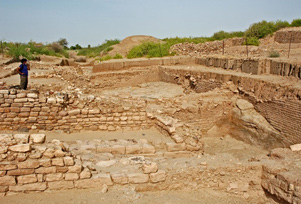
Located 250 km away from the Bhuj district, near Khadir bet in the great Rann of Kutch of Gujarat, Dholavira is an ancient town that contains the fascinating and historic ruins of the Indus Valley Civilization. Locally called Kotada timba, the site is the second largest Harappan site in India and fifth largest in Indian sub-continent. Amongst the Harappan sites discovered so far, Dholavira is the only place that marks the presence of Harappan culture from 2900 BC to 1500 BC.
Dholavira Kutch


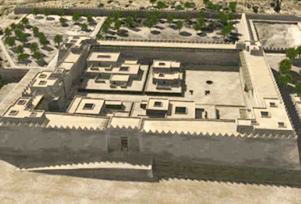
Lying on Khadir Island in the Rann of Kutch, Dhalovira covers an area of about 100 hectares. The ancient settlement is embraced by two monsoon channels, namely, the Manhar and Mansar. Dholavira reveals evidence of a remarkable planned city with broad roads, containing a central citadel (where the rulers or high officials stayed), a middle town with a spacious dwelling, a lower town with markets. Somewhere like other Indus Valley civilization town, Dholavira fortification was also in the form of a parallelogram. Archeologist even believes that the five-thousand-year-old town must have been a lovely city of lakes during the heyday. In fact, the residents of Dholavira had settled the town between two water streams, Manhar and Mansar, collecting their water in monsoon and using it for rest of the year.
Made of sun-dried mud bricks and stone, buildings in the region still stand in good condition. With such amazing architecture, one can figure out that good civil engineers were appointed to make the town. The city was also an important trading point as here one can see the presence of large reservoirs and a dam reflecting the existence of a sophisticated system of water harvesting. In fact, as per some news release in 2014, 5,000-year-old stepwell has been found in Dholavira, which is three times bigger than the Great Bath at Mohenjo Daro. 73.4m long, 29.3m wide, and 10m deep, the reservoir represents largest, grandest, and the best furnished ancient reservoirs discovered so far in the country.
The city seems important during the Indus Valley days as excavations have found evidence of seven layers, indicating as many settlements over a period of 1500 years. Archaeologists have identified seven different stages in the city design. The most interesting aspect of Dholavira is the inscriptions, mainly, ten large signs that are the first evidence of the written language.
What attracts the attention of the people to Dholavera is that the place provides insight into the pioneering Harappan mind, with the world's best water conservation system, first sign boards, and ancient Indus scripts. In the year 1967, people of the Archaeological Survey of India (ASI) unearthed the area. Artefacts include terracotta pottery, beads, gold and copper ornaments, seals, fish hooks, animal figurines, tools, urns, and vessels that indicate trade links with lands were also dug out from this place. All these items and article are now displayed in the museum, which is located at the entrance of the city.
Best Time to Visit: October to December & January to March
How to Reach:
By Railways: Bhuj Railway Station is the nearest railway station
By Airways: Rudra Mata Airport in Bhuj is the nearest airport
By Roadways: Dholavira is 250 km away from Bhuj and is rechaed via Bhachau and Rapar. One can reach Dholavira from Bhuj by hopping in a private taxi or state tourism buses.
Note: No accommodation options are available in Dholavira, and one will have to book a stay in Gandhidham and Bhuj.

Gandhidham – Gujarat’s Industrial Hub


Gandhidham, in the state of Gujarat, is primarily a pilgrimage destination offering all the amenities of modern India while pilgrims can peacefully cover several religious destinations. The origin of this town is fairly recent. It came into existence shortly after partition when Mahatma Gandhi requested the then King of Kutch province, Vijayrajji Khengarji Jadeja, to allocate land for all those displaced refugees who were returning from newly formed Pakistan. Present in the North-Western part of Gujarat, this place has been home to many temples since its beginning, some even belonging to ancient times. Among the most visited ones are the Bhadreswar temple, the Purneshwar temple, and the Sun temple. The well-planned town is also known for the Kandla Port. Today Gandhidham is a rapidly progressing city of prominent townships and industries. The best season to visit this town is between August and April.

Religious Destinations

The religiously diverse Gandhidham is home to several prominent Jain temples as well. Shri Chandra Prabh Labdhi Dham Teerth is one such sacred place. It is dedicated to Chandra Prabhuji Bhagavan, a Jain God. Located on national highway 8A as part of the Kutch district, visitors will also find a Bhojanshala (restaurant) and Dharamshala (boarding place) near the temple complex.
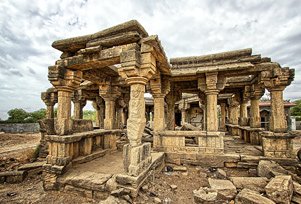
Constructed between the 9th and the 10th centuries, Purneshwar Temple can be found near the towns of Bhuj and Gandhidham. This ancient temple is designed in a classic Hindu architectural style and is perched on a high platform. The temple’s design, images in the interior, and fine sculptures are the biggest attractions for most tourists.
Visit the Kandla Port, one of the biggest and most developed seaports in the country, to combine a glimpse of trade activities with a scenic view of the western coast of India.
Travelers flock to see the Sun Temple in Modhera village. Built in the 11th century, this massive stone temple reflects the Solanki architectural designs of western India. The beauty of this temple lies in intricate stone carvings of various mythological figures, birds, animals, and flowers.

Modes of Travel

The bus transport system of Gandhidham is cheap and highly efficient, connecting the city with other prominent places like Ahmedabad, Dwarka, and Somnath.

Traveling Safely

  • Take note of the local climate before planning your trip. The climate in Gandhidham can swing between bouts of extreme hot summers and severely chilly winters.
  • Make sure you understand the rules and customs of Jain temples as they can differ significantly from traditional Hindu temples.

How to Reach Gandhidham

On a daily basis there are approximately 2 flights that operate at Bhuj Airport.Air India is the popular airline brand that fly frequently to this airport.
Besides flying you can also reach Gandhidham through train.Gandhidham Bgis one of the most popular train stations in Gandhidham.On an average about 31 trains pass through Gandhidham on a daily basis.Samakhiari to Gandhidham, Ahmedabad to Gandhidham, Bhachau to Gandhidhamare some of the most popular routes to Gandhidham with 40, 34, 32 trains weekly respectively.
By road Gandhidham is surrounded by Bhadresar, Bhuj, Jamnagar which are 18.68 km, 30.53 km, 43.46 km away respectively. These places are ideal spots for people to plan their short weekend break.

Where to stay in Gandhidham

Gandhidham has a total of 8 hotels.There are 8 hotels in Gandhidham with the popular ones being Radisson Kandla, Lords Plaza Kandla, Hotel Shiv Regency, Hotel Shiv Grand, Hotel Jai Residency, Hotel Aarti International etc.

Anjar - kutch

Anjar Kutch, Gujarat

Fascinating archaeological sites, superb Hindu architecture and exquisite handicrafts, are amongst the Anjar attractions. With nearly 1,400 years of history, founded around 650 AD, Anjar is claimed to be the oldest town in Kutch. Many earthquakes have devastated the region of Anjar, but the legendary capacity to overcome hardship and disaster, the people lost no time in rebuilding their lives out of the debris around them. It's impossible to come to Anjar and return home empty handed as the markets of the city offers an exciting range of metal handicrafts. Different communities gather in the town to celebrate the Jesai-Toral fair. The festival is celebrated in the memory of the famous couple Jesai and Toral, together they have served the people of Kutch region.
Anjar Temple Kutch


  • Madhavrai templE
  • Bhareswar Mahadev Mandir
  • Jesal-Toral Samadhi
  • Ajaypal temple
  • Holy shrine of Pinjora Pir
  • Ajepal's monastery
  • Swaminarayan's temple
  • Bhidbhanjan Mahadev Temple
How to Reach
By Roadways: One can easily get buses and private taxis from neighbouring towns to reach Anjar.
By Railways: Anjar Railway Station is well connected with the neighbouring towns like Bhuj, Ahmedabad and Gandhidham
By Airways: Rudra Mata Airport (BHJ) in Bhuj is the nearest airport

MANDVI - BEACH CITY

Mandvi Kutch, Gujarat


Once a famous port and now an important tourist attraction in Kutch, Mandvi is one such place where one can expect sea, sand and sun. Mandvi is an old port town that has beaches, horse and camel rides along the shore. Mandvi was established as a port town in 1574 by Khengarji, the king of Kutch. The first landmark in the region was Sundarwar temple, followed by Jama Masjid in 1603, the Lakshminarayan Temple in 1607, the Kajivali Mosque in 1608 and the Rameshwar Temple in 1627. The presence of all these sites is a clear indicator of its importance to the state kingdom. Mandvi port was an important trading center until Mumbai came into the picture.
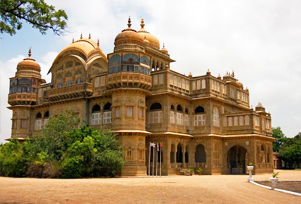
People who want to explore something unique can visit the bank of Rukmavati River, where they can see handmade wooden ships, stand at the Tower of Wagers, where once wealthy shipowner used to gather, awaiting the return of the trading fleet from East Africa, and bet on whose would arrive first. During the bygone era, Mandvi was protected with a fort that had 8 m high wall with gated and 25 bastions. Presently this wall is almost destroyed, but the bastion on the southwestern region is the largest and still acts as a lighthouse. Little away from the Mandvi beach is the Vijay Vilas Palace, which is now a resort and is known for its fantastic architecture. One should take a tour to all these places for a memorable trip in Mandvi.
Vijay Vilas Palace Kutch

  • Vijay Vilas Palace: A beautiful palace turned into a resort, Vijay Vilas Palace was once the summer palace of Jadeja Rajas of Kutch.
  • Swaminarayan Temple at Mandvi
  • The Wind Farms Beach: Asia’s first Wind Mills Project running on the beach, founded in 1983.
  • Rukmavati Bridge
  • To PMansar Lake: A tiny lake located in the heart of the city
  • Shyamji Krishna Varma Smarak: A memorial made in honour of the famous scholar and freedom fighter, Shyamji Krishna Varma.
  • Shitla Mata Temple: Located on Layja Road, it's a famous temple sacred to Shitla Mata
  • Ashapura Mata Temple
How to Reach
By Roadways: Regular buses from the neighbouring towns are provided to reach Mandvi.
By Airways: Nearest airport is Rudra Mata Airport in Bhuj

BHUJ- THE HEART OF KUTCH


Kutch_Bhuj
When you embark on a Kutch tour, preferably during the Rann Utsav 2014-15, there is much to see and much to explore that you might miss out on. In an effort to bring to your knowledge, the various wonders that the Rann of Kutch can throw at you, here is a little something about Bhuj.
The land of Bhuj is a link to civilizations both new and old with its various attractions. The most prominent district in this region, here you will find the key to the ancient days and the town that prospered under the Indus Valley Civilization, known as Dholavira. It is the home of the Harappan culture, one of the earliest civilizations anywhere in the world. The region is widely lauded as one of the best constructed ancient cities and well planned system with a brilliant drainage system that is second to none, the confirmation of which lies in the disclosures of the different unearthings, uncovered for the world to see. The aged Indus script, still not interpret and the coins initiate in this district are additionally in presentation, as are the devices created by the Harappans for simple livies, generous the guest a research the quick personalities of the populace of the Harappan civilization. While on your way to the Rann Utsav 2014-15, do not fail to make your way to Dholavira and bask in the glory of the ingenious Harappans.
While on the Kutch Tour, you may also come across various other wonders that a weekend getaway to Bhuj will treat you to. You can also walk around the Hall of Mirrors, called the Aina Mahal. The Bell Tower at the Prag Mahal offers a truly beautiful sight as you climb all the way to the top and feast your eyes on the land of Kutch.
Your Kutch Tour must not be devoid of the delicious Kutchi treats one can never get enough of. As you stroll through the market stocking the traditional handicrafts and artefacts that Kutch is renowned for, you must sample the famous Kutchi Pav Bhaji. The Kutch museum is another highlight of your trip to Bhuj, home to the various inscriptions of the ancient times.
If you choose to visit Bhuj during the Rann Utsav 2014-15, you’re in for a treat, for the district is bathed in the glory of the annual Rann Utsav.
For any help with your Rann Utsav Online Booking or Kutch Tour, and to find great online deals for the Rann Utsav, contact us today.

WHITE RANN OF KUTCH

I took a few steps away from the crowds and started walking – towards “nothing”, I soon realised. There were no mountains or lakes, not even flickering lights dotting the horizon. Just a blanket of white merging into another blanket of white.
The mind games had begun on the very first morning of our visit to the White Rann of Kutch.
“Sunrise
The further I walked, the further nowhere I was reaching. All I heard now was the sound of the wind and a crackle under my feet – of my shoes rubbing against salt, hard crystalline salt. This salt stretched for miles and endless miles all around.
“Sunrise
My mind now started pulling out past instances where I’ve felt this vastness before. On a boat surrounded by water and only water all around. Next are scenes from a long haul flight – when clouds are all that you see.
On the water or in the sky, this feeling of an unending landscape had made sense. But right then, my feet were firmly rooted to the ground. Yet, if I stood up it looked like I was surrounded by water. If I bent low everything looked like clouds. What exactly was happening here?
“Sunrise

Delusions at the White Rann of Kutch start at its formation

The delusions didn’t end with our visit to White Rann of Kutch. The story of the formation of this desert of salt was even more fascinating. Post-summer as the monsoon arrives, the waters of the Gulf of Kutch flood into this desert, making the White Rann look like a massive sea. On windless days, perfect mirror reflections of the sky are seen on these “desert waters”. From around July till late October-November, this part of the desert of the Great Rann of Kutch essentially resembles a sea!
“Sunrise
As the monsoon ends, this water starts receding and evaporating. The saline water then leaves a thick layer of salt, making the desert the White Rann of Kutch.
Even without the water, the salt flats act like a mirror, reflecting the colours of the sky. On a crisp morning, they reflect the pink-orange-golden hues of the sunrise. On a hazy, cloudy morning, they look dull and forlorn. What stays constant is their larger than life expanse.
“White

These delusions on the salt flats weren’t new for us

The visit to the White Rann of Kutch wasn’t our first time witnessing the wonder of salt flats. In Bolivia, the salt flats of Uyuni, the biggest salt flats on earth had left us speechless. So the feeling of seeing salt spread out till the eyes could see wasn’t new.
“Road
What wasn’t familiar was going through several BSF (Border Security Force) barriers to reach the salt flats. The White Rann of Kutch isn’t a place you can just walk up to. You need to acquire permission from the BSF. The timings of the visit to the White Rann is also decided by the BSF. Sunrise and sunset is the only time civilians get to enter the White Rann of Kutch. On a couple of nights before and after the full moon are also permitted by the BSF.
All these permissions and restrictions sure added to the excitement. That, and the sense of ownership we felt when we were told that somewhere close beyond this sea of salt was the “border”!
This closeness to the international border suddenly made the White Rann of Kutch “our salt flats”!
“Sunrise
Evenings are when these salt flats feel especially Indian. If a visit to the White Rann of Kutch in the morning is a whitewash, in the evening it’s loaded with colours of not just the setting sun. The tourist activity at the White Rann, especially during the Rann Utsav is a major source of income for the people from the neighbouring villages.
“Sunset
There are folk music, beaded jewellery and the most iconic – camel rides. The salt flats might be nature’s creation, but the vigour that you get to see on your visit to the White Rann of Kutch is characteristically Indian.
“Camel
“Camel
There’s a watch tower at the far end of the path that leads to the White Rann of Kutch. The top of this tower is from where you truly come to terms with what the vastness of the White Rann of Kutch is all about. For a small radius, you see the people, their cameras and the camel carts. There’s movement here. As you look further ahead, the groups of people start thinning out until finally there’s nobody and nothing.
“Watch
“White

Delusions in the photography at the White Rann of Kutch

The vast salt flat with an empty horizon lends itself to a unique kind of photographic fun. Without any structure – manmade or natural to give any sense of scale you can make any object look as big or small as you choose to. We explored this forced perspective photography on our visit to the White Rann of Kutch.
“Peeking
“Forced
Enthusiastic participation by worthashott and Piyush.
On the second day of our visit to the White Rann, we packed our bags with props to have some perspective fun. Blogger and photographer Ajay Sood literally got on the ground (salt flats) to create these forced perspective shots (he’s written some useful tips).
“Forced
“Forced
“Sunset

Combine a visit to the White Rann of Kutch with a visit to the neighbouring villages

“Bhunga
It needs to be stressed that the White Rann is part of the Great Rann of Kutch. We are in the middle of the desert here. And desert life is synonymous with harsh and difficult. Probably as an antidote to the extreme weather that’s part of life here, a wide range of arts have flourished here.
“Bhunga
“Handmade” is the keyword here – for everything from beaded jewellery, patched quilts, or embroidered dresses with motifs and design inherent to the culture of Kutch.
“Girls
“Traditional
The villages we visited, the people were friendly but matter-of-fact. They were the artists, creators. And we – visitors with cameras, were their target market. “Buy something and then take as many pictures”, was a mantra followed by everyone. We appreciated this sense of business they had developed here and respected their rules.
“A
A peculiar art form called Rogan art practised in only the village of Nirona. Delicate patterns mainly centred around the “Tree of Life” are made with colours derived from – surprise, surprise – castor oil! Castor is one the few plants that grow in the desert here. Local and unique to this region, this art form has received accolades globally.
“A
“Pieces

Glamping during the visit to the White Rann of Kutch

Glamping is now easily possible during your visit to the White Rann of Kutch. We had been invited by the Gujarat Tourism and stayed in the luxurious tents at the White Rann Resort. The tent had all that’s needed for a comfortable life- solid wooden furniture including a large bed, air conditioning (heater during the winter), a geyser and running water! Yes, we did feel like we were cheating – living in comforts despite being in the desert.
“White
“Bhunga
But then again, nature doesn’t create everyone equally. And urban life saps us out of the resilience needed to live a desert life. Glamping is then the option everyone can exercise to experience the desert minus the hardships, and contribute to the local economy.
“White


Useful tips to visit the White Rann of Kutch
  • Dhordo village is the closest village to the White Rann of Kutch.
  • How to get to the White Rann of Kutch? Bhuj is the main connecting head to visit Kutch and the White Rann. There’s limited but functional connectivity rail connectivity. The airport at Bhuj is controlled by the military. Direct flights to Mumbai and connecting flights to all major cities are available. Alternately, get to Ahmedabad and take an overnight bus to Bhuj.
  • Pick up and drop to Bhuj is organised by the White Rann Resort if you’re staying there. A comfortable resting lounge is organised by the White Rann Resort, right outside the Bhuj railway station.
  • The locals of the villages around the White Rann of Kutch also run homestays. To get a more local experience (please be open-minded about the lack of comforts), you can also choose to stay in these villages with the locals.
  • Kutch is the largest district in the state of Gujarat. While the Rann of Kutch has, in recent times become its most popular destination, there’s a lot more to Kutch. If you are planning to explore Kutch beyond the Rann of Kutch, we would recommend spending 8-10 days. Places might look near on the map, but because of the desert of the huge Lake of Kutch, the road is sometimes a bit of a loop. Just choose a few villages and stay in each for a couple of days.
  • Spare a night (at least a day – book your return tickets for the night) in Bhuj. Click Hotel is the most convenient place to stay in Bhuj – right outside the railway station.
  • The best time to visit the White Rann of Kutch is just after the festival of Makar Sankranti. The weather is still pleasant and the year-end crowds have receded.
  • Full moon nights are the most popular time to visit the White Rann of Kutch. In case you don’t get bookings for that night, plan a visit a day or two before or after. You’ll enjoy the same experience.
  • If you have more days during your visit to the Rann of Kutch then you can visit more of Kutch and its many villages like Sumresar and Lakhpat for a more local interaction.
  • You can visit the Kalo Dungar on one of the evenings at the White Rann itself.
  • Dholavira, the biggest excation site of the Indus Valley Civilisation, in India can be visited as a day trip from the White Rann of Kutch.
  • A visit to the White Rann can be self planned and economical.

    Map to visit the White Rann of Kutch from Bhuj

Rani ki Vav

Rani ki Vav  or  Rani Ki  vav  ( lit.   Queen’s stepwell ) is a  stepwell  situated in the town of  Patan  in  Gujarat  state of  India . ...